

In many households, reliable internet has become just as important as electricity and running water. Streaming movies, video calls, smart home devices, online gaming, and remote work all depend on strong wireless coverage. Yet many homes still struggle with weak signals, inconsistent speeds, and sometimes, zones entirely without coverage. Wi-Fi mesh systems have emerged as a popular solution, promising broader coverage and more seamless connectivity. Understanding how they work can help determine whether they're a worthwhile upgrade in your home.
What Is a Wi-Fi Mesh System?
A Wi-Fi mesh system is a networking solution designed to provide wireless internet coverage across a larger area than a traditional router can typically reach on its own. Instead of relying on a single device to broadcast a signal throughout an entire home, a mesh system uses multiple devices called nodes that work together to create one unified network.
Unlike traditional setups where signal strength often weakens as you move farther from the router, mesh systems are designed to maintain strong coverage throughout the home. Devices automatically connect to the strongest node available, helping users move from room to room without manually switching networks or experiencing sudden drops in connectivity.
How Does a Wi-Fi Mesh System Work?
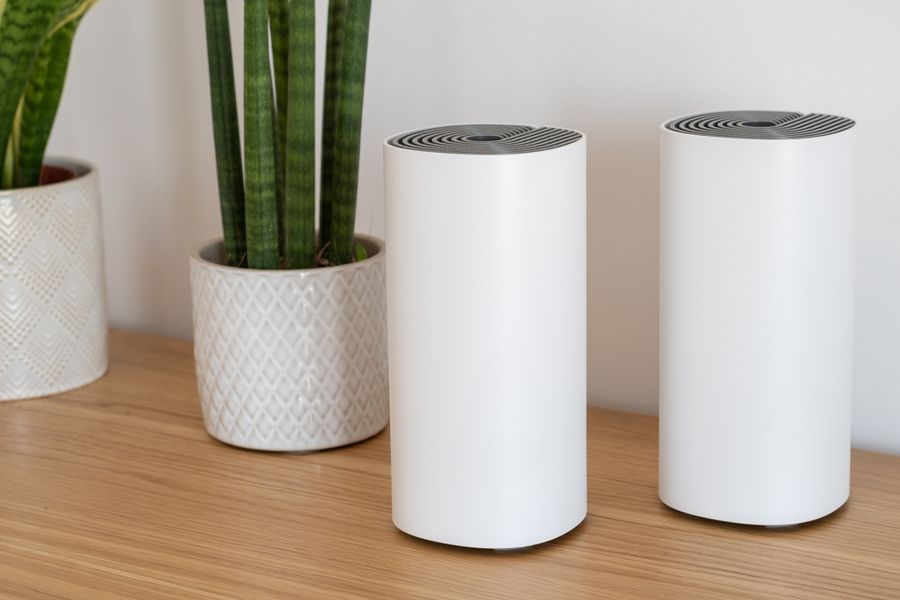
A mesh system consists of a primary router connected to your modem and one or more satellite nodes placed throughout the home. Together, they create a network designed to distribute wireless coverage more evenly.
The process generally works like this:
- The primary node connects directly to your internet service.
- Additional nodes are placed throughout the home to extend coverage.
- Each node communicates with the others to share network information.
- Devices automatically connect to the strongest available node.
- The entire system operates under a single network name (SSID).
- Many systems can be managed through a smartphone app.
The result is a more seamless experience compared to switching between multiple networks or dealing with areas where signal strength drops significantly.
Benefits and Drawbacks of Mesh Wi-Fi Systems
Mesh systems offer several advantages, but they aren't necessarily the best solution for every household. Understanding both sides can help buyers make a more informed decision.
Benefits
- Eliminates many common dead zones throughout the home
- Provides more consistent coverage across multiple floors
- Creates a single network instead of multiple network names
- Simplifies management through mobile apps
- Easily expandable by adding additional nodes
- Works well with smart home devices spread throughout a property
Drawbacks
- Usually costs more than a traditional router
- Some systems require subscription services for advanced features
- Performance may vary depending on node placement
- Can be unnecessary for smaller homes or apartments
- Additional nodes require available electrical outlets
For households struggling with weak signals in bedrooms, basements, garages, or outdoor areas, the benefits often outweigh the drawbacks. Smaller living spaces, however, may not experience enough improvement to justify the additional cost.
Mesh Wi-Fi vs Wi-Fi Extenders
Many people compare mesh systems to traditional Wi-Fi extenders because both aim to improve wireless coverage. However, they accomplish that goal in very different ways.
Wi-Fi extenders typically capture an existing signal from a router and rebroadcast it farther into the home. While effective in some situations, extenders often create a separate network name, requiring devices to switch between connections as users move around the house. Performance can also decrease because the extender is essentially repeating an already weakened signal.
Mesh systems are designed differently. Rather than simply repeating the signal, nodes work together as part of a single coordinated network. Devices transition automatically between nodes without interruption. While extenders remain a lower-cost option, mesh systems generally provide a smoother and more reliable experience in larger or more complex homes.
Traditional Routers, Mesh Systems, Extenders, and Access Points Compared
|
Solution |
Best For |
Coverage |
Ease of Setup |
Scalability |
Cost |
|---|---|---|---|---|---|
|
Traditional Router |
Small homes and apartments |
Moderate |
Easy |
Limited |
Low |
|
Mesh System |
Medium to large homes |
Excellent |
Easy |
Excellent |
Moderate to High |
|
Wi-Fi Extender |
Single dead zones |
Good |
Moderate |
Limited |
Low to Moderate |
|
Large homes and businesses |
Excellent |
More Complex |
Excellent |
Moderate |
Features to Compare Before Buying
Not all mesh systems are created equal. Some are designed for basic internet use, while others target gamers, smart home enthusiasts, or households with dozens of connected devices.
Key features worth comparing include Wi-Fi standards, maximum coverage area, number of supported devices, app functionality, parental controls, security features, and the availability of Ethernet ports. Newer systems supporting Wi-Fi 6 or Wi-Fi 7 can offer faster speeds and better performance when many devices are connected simultaneously.
Buyers should also consider the size and layout of their homes. A simple two-node system may be sufficient for a modest single-story house, while larger multi-story homes may require three or more nodes for optimal performance. Understanding the property's needs often matters more than simply choosing the most expensive system available.
Where Mesh Systems Work Best (and Where They Don't)
Wi-Fi mesh systems tend to deliver the biggest improvements in larger homes, multi-story properties, and layouts where walls, floors, or long distances weaken wireless signals. They're also a strong fit for households with many connected devices, including smart TVs, security cameras, gaming consoles, smart speakers, and home automation systems. If family members frequently complain about buffering videos or dropped video calls in certain rooms, a mesh network can often solve those coverage issues.
However, mesh systems aren't always the best answer. Small apartments, condos, and compact homes often receive excellent coverage from a quality standalone router. In those situations, a mesh setup may add unnecessary cost without delivering noticeable benefits. Homes with only one isolated dead zone may also find that a Wi-Fi extender or access point provides a more affordable solution. Matching the technology to the size and complexity of the property is often the key to getting the best value from any network upgrade.
Decision Checklist: Do You Really Need a Mesh System?
Answering a few simple questions can help determine whether a mesh network is likely to provide meaningful benefits.
- Do you have Wi-Fi dead zones in certain rooms?
- Does your home have multiple floors?
- Are you using more than 15 to 20 connected devices regularly?
- Do video calls or streaming services frequently buffer?
- Is your router several years old?
- Do smart home devices lose connection in certain areas?
- Do you currently rely on one or more Wi-Fi extenders?
If you answered "yes" to several of these questions, a mesh system may significantly improve your network experience. If coverage is already strong throughout your home, a traditional router may continue to meet your needs.
Wi-Fi Mesh System FAQs
Do mesh systems make internet speeds faster?
A mesh system doesn't increase the speed provided by your internet service provider. However, it can improve the quality and consistency of the connection throughout your home, making it feel faster in areas that previously had weak coverage.
How many mesh nodes do I need?
The number depends on the size and layout of your home. Many households achieve excellent coverage with two or three nodes, while larger properties may require additional units.
Can I use a mesh system with my existing modem?
Yes. Most mesh systems connect directly to an existing modem supplied by your internet provider.
Are mesh systems good for gaming?
Many mesh systems work very well for gaming, especially in larger homes where weak Wi-Fi signals can cause lag or connection issues. Some models even include gaming-specific optimization features.
Is a mesh system worth it for an apartment?
Often, no. Many apartments are small enough that a quality traditional router can provide adequate coverage without requiring additional nodes.
Better Coverage Starts with the Right Network
Wi-Fi mesh systems have become one of the most effective solutions for households struggling with coverage issues. By using multiple coordinated nodes instead of relying on a single router, they can provide more consistent connectivity throughout a home and reduce the frustration caused by dead zones.
That doesn't mean every household needs one. Smaller homes may see little benefit, while larger properties often experience dramatic improvements. The key is evaluating your current coverage, device count, and network frustrations. For many homeowners, a mesh system turns unreliable Wi-Fi into a seamless experience that simply works wherever it's needed.