

Technology is transforming how German businesses manage finances, organize employees, serve customers, and compete in international markets. From advanced enterprise software to affordable tools for smaller companies, digital solutions can reduce administrative work and improve operational efficiency. Understanding the capabilities of specific tools, including those designed for German accounting and employment requirements, can help organizations make investments that support sustainable business growth.
ERP Software for Managing Complex Operations
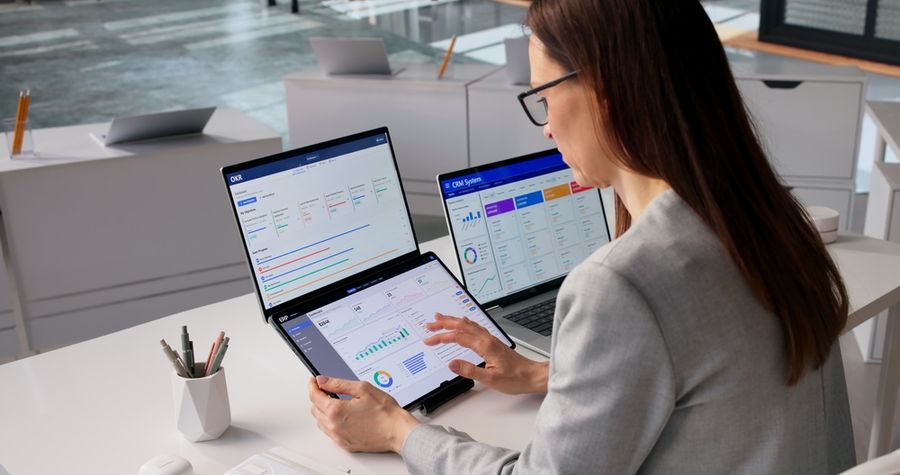
Enterprise resource planning (ERP) software helps companies coordinate activities such as purchasing, accounting, inventory management, and production. These systems are particularly relevant to Germany's manufacturing, logistics, and wholesale industries, where information often needs to move between several departments.
SAP Cloud ERP is a prominent example. It provides integrated applications for finance, purchasing, sales, manufacturing, and human resources. Businesses can use these functions to monitor inventory, manage orders, coordinate production, and improve financial reporting (source).
For a German manufacturer, an ERP system can help connect purchasing decisions with production schedules and inventory availability. However, implementation may involve substantial configuration, employee training, and data migration. Smaller organizations should consider whether a focused accounting or inventory platform would meet their requirements more economically.
Accounting Software and Electronic Invoicing
Financial management software is especially important for businesses operating under German accounting and tax requirements. Digital bookkeeping tools can help companies organize receipts, generate invoices, track payments, and exchange financial information with tax advisers.
DATEV is an established option for accounting and tax-related administration in Germany. Smaller businesses may also consider sevdesk, which offers invoicing, bookkeeping, receipt management, and integration with tax advisers.
Germany's electronic invoicing reforms are making software compatibility increasingly important. Since January 1, 2025, businesses generally have been required to receive structured electronic invoices for qualifying domestic business-to-business transactions. Transitional arrangements permit many businesses to continue issuing other invoice formats through 2026, with additional extensions for certain companies through 2027.
sevdesk supports electronic invoice formats including XRechnung and ZUGFeRD, allowing businesses to create, receive, and process structured invoices (source).
Cloud Platforms for Collaboration and Flexibility
Cloud-based software allows employees to access business applications, documents, and information from different locations. This flexibility can benefit German companies operating multiple offices, coordinating remote employees, or working with external partners.
Microsoft 365 combines communication, document management, and collaboration tools through applications such as Teams, SharePoint, and OneDrive. Businesses can use these services to share files, organize meetings, and coordinate projects without relying entirely on locally installed systems.
Cloud solutions can also simplify software updates and accommodate changing workforce requirements. However, companies should evaluate subscription expenses, data migration, integration capabilities, and service availability.
For organizations handling sensitive information, data protection requirements and contractual safeguards should influence provider selection. European hosting arrangements may be relevant, but server location alone does not guarantee regulatory compliance.
Automation Tools That Reduce Administrative Work
Business automation software helps organizations complete repetitive tasks with less manual intervention. Activities such as routing approval requests, transferring information between applications, and issuing routine notifications can often be organized through automated workflows.
Microsoft Power Automate is one example. Its approval features allow businesses to create workflows for reviewing documents, expense reports, vacation requests, and other activities requiring authorization. Requests can be assigned to specific employees, and subsequent steps can follow their decisions (source).
A German consulting company could use automation to route employee expense submissions for approval, while a distributor might automate notifications when orders require attention.
The most effective approach is often to automate a clearly defined process first, evaluate the results, and expand only when the benefits justify additional complexity.
Human Resources Software for Growing Companies
As German businesses expand their workforces, managing recruitment, employee records, leave requests, and payroll becomes increasingly demanding. Human resources platforms can centralize information and reduce reliance on disconnected spreadsheets.
Personio is a German-founded HR software provider offering tools for employee administration, recruitment, performance management, and payroll-related processes. Its platform also includes workforce reporting and automated workflows (source).
For growing organizations, these capabilities can make it easier to coordinate hiring and maintain consistent personnel information. Employee self-service features may also reduce routine questions handled by HR departments.
Businesses should verify compatibility with German employment requirements, payroll arrangements, and existing financial systems before selecting a platform.
Artificial Intelligence and Business Analytics
Artificial intelligence and analytics tools are becoming increasingly useful for German organizations seeking to improve decision-making. These technologies can assist with document processing, forecasting, customer communication, and analyzing operational information.
Microsoft Power BI allows companies to create dashboards and reports from business data. A retailer could use it to compare sales across locations, while a manufacturer might monitor production performance or purchasing trends.
AI-powered assistants can support routine writing, summarize documents, and help employees retrieve information. However, their output requires verification, particularly when used for financial, legal, or customer-related decisions.
Companies should prioritize applications that solve measurable problems rather than introducing AI simply because the technology is widely discussed.
Cybersecurity Tools for Protecting Business Systems
Greater reliance on connected software also increases the importance of cybersecurity. Businesses need to protect employee credentials, financial records, customer information, and operational systems from unauthorized access.
Security solutions may include endpoint protection, multifactor authentication, email filtering, backup systems, and access management. Providers such as Sophos and Hornetsecurity offer technologies addressing different aspects of business security.
German companies should assess which information and systems are most critical, then select protections appropriate to their risk exposure. Regular updates, controlled access permissions, and employee training are essential complements to security software.
Choosing the Right Tools for Business Growth
The most useful technology investments address specific operational needs. SAP Cloud ERP supports complex business management, DATEV and sevdesk serve financial administration, Power Automate handles repetitive workflows, and Personio supports workforce management.
Before purchasing software, German businesses should compare functionality, implementation costs, integrations, security features, and ongoing support. Testing realistic business processes can help determine whether a solution offers practical value.
By selecting tools that fit their requirements, organizations can improve efficiency, strengthen coordination, and establish a reliable foundation for long-term growth.