

Outdoor furniture does more than provide a place to sit. The material you choose influences comfort, durability, maintenance requirements, and overall appearance for years to come. Some options develop character as they age, while others prioritize low maintenance and weather resistance. With so many choices available, understanding the strengths and weaknesses of each material can make shopping easier. A closer look at popular patio furniture materials will reveal why certain options work better for specific climates, lifestyles, and outdoor spaces.
Why Material Choice Matters
Patio furniture faces challenges that indoor furniture never encounters. Sun exposure, rain, humidity, temperature fluctuations, and everyday use all contribute to wear and tear over time. A material that performs well in a dry climate may struggle in a humid coastal environment, while furniture designed for harsh weather may offer less visual warmth than other options.
The right material also affects long-term ownership costs. Some furniture requires regular sealing, staining, or cleaning, while other materials need little more than occasional washing. Beyond durability, material choice impacts comfort, weight, appearance, and how easily furniture can be moved or rearranged. Evaluating those factors before purchasing can help ensure your investment continues to look and perform well season after season.
Wood Patio Furniture: Pros and Cons
Wood remains one of the most popular patio furniture materials because of its timeless appearance and natural warmth. Premium woods such as teak, eucalyptus, and acacia are often chosen for outdoor use because they naturally resist moisture, insects, and decay. Many homeowners appreciate how wood blends seamlessly into outdoor landscapes and creates a welcoming atmosphere.
Pros
- Natural, classic appearance
- Strong and durable when properly maintained
- Available in many styles and finishes
- Ages beautifully over time, especially teak
Cons
- Requires periodic maintenance
- Can fade or weather without protection
- Usually heavier than synthetic materials
- Higher-quality woods can be expensive
Wood furniture can last for decades when properly cared for. However, buyers should be prepared for routine maintenance if they want to preserve the original color and finish. Some people embrace the silver-gray patina that develops naturally, while others prefer regular treatments to maintain a freshly finished appearance.
Metal Patio Furniture: Pros and Cons
Metal furniture offers exceptional durability and versatility. Aluminum, wrought iron, and steel are among the most common choices. Each brings unique advantages, ranging from lightweight portability to unmatched strength. Metal furniture often fits contemporary, industrial, and traditional outdoor designs equally well.
Pros
- Extremely durable
- Resistant to insects and rot
- Wide range of styles available
- Can withstand years of outdoor exposure
Cons
- Some metals may rust without protection
- Wrought iron can be very heavy
- Metal surfaces may become hot in direct sunlight
- Lower-quality finishes can chip or scratch
Aluminum is especially popular because it combines durability with lightweight construction. Wrought iron remains a favorite for homeowners seeking elegant, substantial furniture that stays firmly in place during windy conditions. Powder-coated finishes help improve weather resistance and reduce maintenance requirements across many metal furniture options.
Wicker and Resin Furniture Options
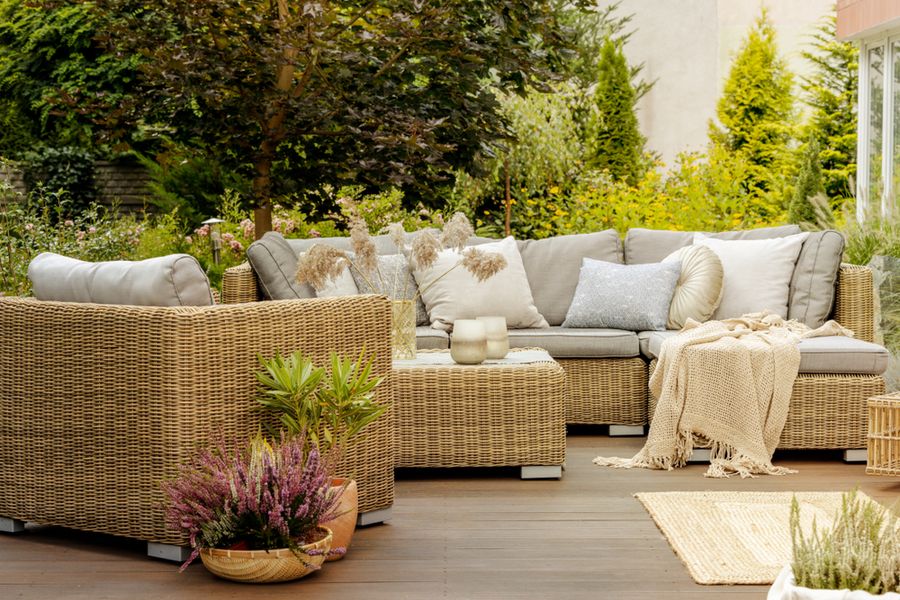
Wicker furniture creates a relaxed, casual look that works particularly well in outdoor living spaces. Traditional natural wicker is typically reserved for covered patios because prolonged exposure to moisture can cause deterioration. Modern outdoor furniture generally uses synthetic resin wicker, which is specifically designed to withstand outdoor conditions.
Resin wicker offers much of the charm associated with traditional wicker while providing greater durability and easier maintenance. It resists moisture, fading, cracking, and insect damage better than natural alternatives. Many homeowners appreciate how lightweight resin furniture is compared to wood or wrought iron. Cushions often play a significant role in comfort, making fabric quality an important consideration when shopping for wicker sets.
Plastic and Poly Lumber Furniture
Plastic furniture has evolved considerably from the lightweight lawn chairs many people remember. Modern high-density polyethylene (HDPE) and poly lumber furniture offer impressive durability while requiring minimal maintenance. Many products are made from recycled materials, making them appealing to environmentally conscious buyers.
Poly lumber furniture is particularly popular because it mimics the appearance of painted wood while eliminating concerns about rot, splintering, or insect damage. It performs well in coastal regions, rainy climates, and areas with intense sun exposure. While some pieces may cost more initially than basic plastic furniture, their longevity often helps justify the investment.
Buying Considerations Beyond Material
While material plays a major role in performance, other factors deserve attention before making a purchase. Comfort should remain a priority, especially for furniture intended for dining, lounging, or entertaining guests. Cushion quality, seat depth, and ergonomic design can influence satisfaction just as much as durability.
Homeowners should also think about storage, mobility, and available space. Heavy furniture may provide stability but can be difficult to move. Lightweight options allow for easier rearrangement but may require securing during storms. Considering local weather patterns, intended use, and long-term maintenance expectations can help narrow down the best choices for any patio setup.
How Climate Affects Furniture Performance
Climate often determines whether a material thrives or struggles outdoors. Dry climates tend to be easier on most materials, although prolonged UV exposure can fade finishes and weaken certain plastics. Humid regions create greater challenges, particularly for untreated wood and lower-quality metals that may be prone to moisture damage.
Coastal environments present unique concerns because salt air can accelerate corrosion on metal furniture. Homeowners near the ocean often prefer aluminum, resin wicker, or poly lumber because they resist salt-related deterioration more effectively. Understanding how local conditions affect different materials can prevent costly mistakes and extend furniture lifespan significantly.
Maintenance Requirements by Material
One of the biggest differences between patio furniture materials involves upkeep. Some homeowners enjoy occasional maintenance projects, while others prefer furniture that requires little attention beyond basic cleaning.
Wood furniture often demands the most care. Depending on the species and desired appearance, owners may need to oil, seal, or stain surfaces periodically. Metal furniture generally requires occasional cleaning and inspection for scratches or chipped finishes that could expose bare metal.
Resin wicker and poly lumber tend to be among the easiest materials to maintain. A simple rinse with water and mild soap is usually sufficient to keep them looking their best. Buyers seeking low-maintenance outdoor living often gravitate toward those materials for that reason alone.
Material Comparison Table
|
Material |
Durability |
Maintenance Level |
Weather Resistance |
Weight |
Best For |
|---|---|---|---|---|---|
|
Teak Wood |
Excellent |
Moderate |
Excellent |
Heavy |
Premium outdoor spaces |
|
Eucalyptus Wood |
Good |
Moderate |
Good |
Medium |
Natural appearance on a budget |
|
Aluminum |
Excellent |
Low |
Excellent |
Lightweight |
Easy-to-move furniture |
|
Wrought Iron |
Excellent |
Moderate |
Good |
Very Heavy |
Windy locations and traditional styles |
|
Steel |
Very Good |
Moderate |
Good |
Heavy |
Modern outdoor furniture |
|
Resin Wicker |
Very Good |
Low |
Very Good |
Lightweight |
Casual outdoor living areas |
|
Poly Lumber |
Excellent |
Very Low |
Excellent |
Heavy |
Low-maintenance homeowners |
|
Plastic |
Good |
Very Low |
Good |
Lightweight |
Budget-friendly patios |
Which Material Offers the Best Long-Term Value?
Value isn't always determined by the lowest purchase price. Furniture that lasts ten to twenty years often proves more economical than cheaper alternatives that need replacement after only a few seasons. Teak, aluminum, and poly lumber frequently rank among the strongest long-term investments because of their durability and weather resistance.
That said, the best value depends on individual priorities. A homeowner seeking luxury and timeless style may find teak worth the premium price. Someone prioritizing convenience may prefer resin wicker or poly lumber. Balancing initial cost, maintenance expectations, and projected lifespan often leads to the smartest purchase decision.
Choosing Patio Furniture You'll Enjoy for Years
No single patio furniture material is perfect for every home or every climate. Wood offers timeless beauty, metal delivers strength, wicker creates a relaxed atmosphere, and modern synthetic materials provide impressive durability with minimal upkeep. Each option brings unique advantages and tradeoffs that appeal to different homeowners.
The most successful purchase usually comes from matching the material to your environment, maintenance preferences, and lifestyle. Whether you're furnishing a small balcony, a backyard dining area, or a large outdoor retreat, selecting the right material can help create a comfortable space that remains attractive and functional for many seasons to come.